




Toshiba Discrete Thermostat Solution
Toshiba Discrete Thermostat Solution provides improved reliability and performance in a smaller footprint. The accelerating demand for energy-efficient solutions and a surge in the number of smart home devices will encourage significant growth for smart thermostats. Efficient energy savings, smart controlling, and reduction in per unit energy cost are some underlining parameters that will guide the industry moving forward. It’s essential to reduce power consumption and space requirements and improve operating life to increase the functionality and performance of these devices. Toshiba offers products that meet these critical requirements with the current LDO technologies and photo relays, which have garnered much success in thermostats and other similar designs.
Features
- A broad portfolio of products
- Keeping low stand-by current to contribute to low power operation
- Increasing heat dissipation capabilities with efficient packaging
- Optical coupling over an isolated barrier
- Offers application notes, reference design, and other material to help with design
Power Supply Circuit Block Diagram

Various power supply voltages are required for thermostat sensors and high-frequency circuits to increase functionality and reduce power consumption. Choosing an LDO regulator for power supply stabilization and voltage conversion is especially important. The Toshiba TCR3UM and TAR5SB are recommended LDO regulators. Low standby current reduces total system power consumption, and Over-temperature/overcurrent protection provides stability to avoid unexpected system power events.
View Recommended Toshiba LDO Regulators, MOSFETS, and Operational Amplifier
Interface Circuit Block Diagram
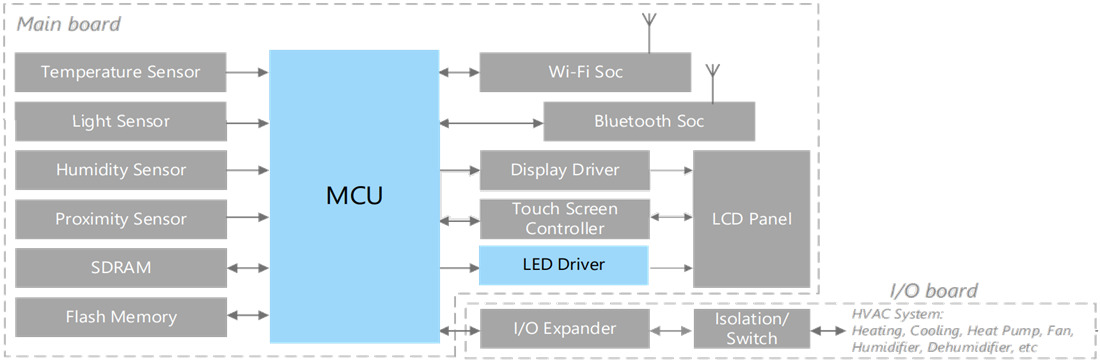
Central heating and forced air systems are standard in Europe and North America. Modern systems for heating, cooling, and ventilation (HVAC) have evolved, and thermostats are an integral part. This system is connected to a motor or something similar. This connection means the thermostat is constantly exposed to motor noise or abnormality risk. Isolation from the system is essential to avoid this risk. Toshiba photo relays are preferred for isolation due to low on-resistance (RON) and a wide range of allowable on-current (ION). These devices are available in small packages designed to shrink the footprint and improve design flexibility.
Related Products

Toshiba U-MOSVI Small Signal MOSFETs
Supports high-current charging with low voltage and low RDS(on) requirements.
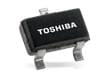
Toshiba U-MOSVII MOSFETs
P-channel MOSFETs featuring a low voltage gate drive and low drain-source on-resistance.

Toshiba U-MOSIII MOSFETs
Single and dual-channel MOSFETs ideal for high-speed switching applications

Toshiba U-MOSVII-H MOSFETs
Logic-level gate drive and low-voltage gate drive MOSFETs, offered in a wide range of SMD packages.

Toshiba U-MOSIX-H MOSFETs
Offers high-speed switching, a small gate charge, and a small output charge.

Toshiba TAR5S Bipolar Linear Integrated Circuits
Comprised of general-purpose bipolar single-power-supply devices incorporating a control pin.

Toshiba TC75S67TU Ultra Low Noise Operational Amplifier
Designed to operate with low input current supply and low input noise voltage.
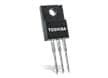
Toshiba π-MOS VII MOSFETs
Single N-channel MOSFETs, offered with a drain-source voltage range of 250V up to 650V.
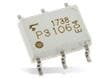
Toshiba TLP310x Photorelays
Trench MOSFET Photorelays featuring low ON-state resistance and high permissible ON-state current.
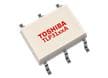
Toshiba TLP31xxA Photorelays
Compact photorelays featuring a low ON-state resistance and high permissible ON-state current.

Toshiba TLP35xxA High-Current Photorelays
State-of-the-art MOSFETs optically coupled with an LED, reducing board space.

Toshiba TLP3823 & TLP3825 Photorelays
Mid-voltage, high current photorelays housed in a compact 8-pin DIP package.