Communications in Space: A Deep Subject
By Barry Manz, Mouser Electronics
Featured Products
Featured Suppliers
Related Resources
Transmitting and receiving radio signals between spacecraft in deep space is a snap compared with getting those
signals back to Earth, especially when the spacecraft is 120 billion miles away.
Even though we’ve sent spacecraft hundreds of billions of miles into space and rovers are gathering enlightening
information about planets, moons, and even asteroids, radio communication in space still remains the new frontier.
While the missions themselves are a marvel of technical wizardry, so too is the Herculean feat of not just
communicating between spacecraft but sending signals back to Earth.

Figure 1: The Pale Blue Dot is part of the first-ever 'portrait'
of the solar system taken by Voyager 1. The spacecraft acquired 60 frames to create a mosaic of the solar system
from more than 4 billion miles from Earth. At that distance, Earth is just a speck of light less than a pixel in
size.
Man’s greatest achievement in this regard is the Voyager spacecraft launched in 1977, that 38 years later is still
communicating with Earth from more than 120 billion miles away, and has far outlived even the most optimistic
projections of longevity. NASA recently celebrated the 25th anniversary of the last time Voyager sent its last
images to Earth in 1990. The decision to take one last glimpse as Voyager left the solar system was made by Carl
Sagan, who was a member of the Voyager team. The image (Figure 1) was called “The Pale Blue Dot” and become the
title of Sagan’s 1994 book.
Voyager has remained operational for nearly four decades, which is hard enough for Earth-bound electronic systems.
It’s a true engineering marvel considering that Voyager technology was state of the art when All in the Family was the
TV top sitcom
in the U.S. It’s also testament to the incredible capabilities of the NASA Deep Space Network (DSN) that captures Voyager’s incredibly faint radio
signal after
being weakened by passage through the Earth’s attenuating atmosphere. The space communications challenge is great
today, even with technology that is orders of magnitude more advanced. It becomes even more vexing as the resolution
of still images and video is far greater, which translates into huge amounts of data from cameras, telescopes, and
scientific equipment.
The Deep Space Network
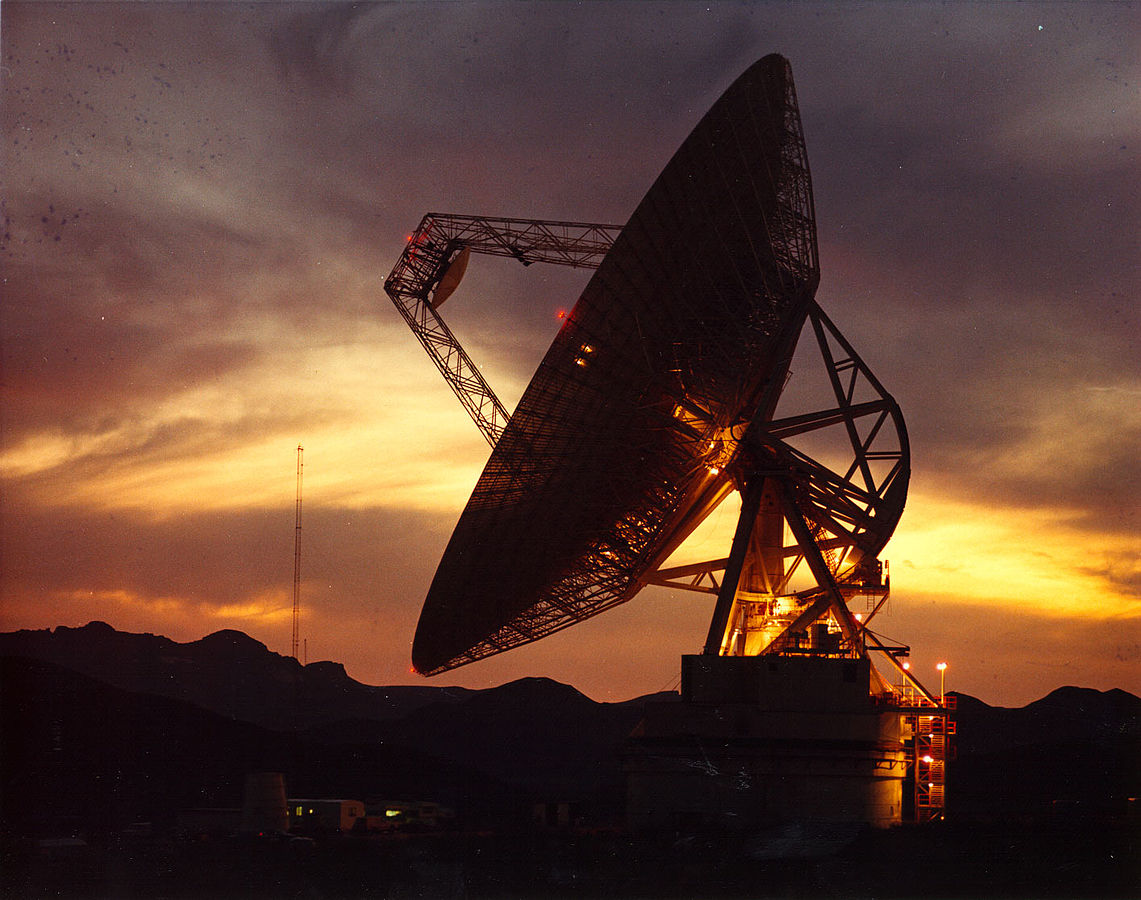
Figure 2: The 70-m antenna at the Goldstone Deep Space
Communications Complex, in the Mojave Desert. (Source: "Goldstone DSN antenna". Licensed under Public Domain via
Wikimedia Commons.)
In the U.S., the bulk of the development in deep-space communications has been conducted at NASA’s Jet Propulsion
Laboratory (JPL) located in La Cañada Flintridge, CA, which is managed for NASA by the California Institute of
Technology. The list of advancements achieved by JPL is massive thanks in no small measure to the many scientists
who have made contributions there, including Erwin Schrödinger, Werner Heisenberg, Hendrik Lorentz, Niels Bohr, and
Albert Einstein. JPL has been a major participant in every NASA space mission, from construction and operation of
robotic planetary spacecraft through Earth-orbit and astronomy missions and operation of the DSN that is the
terrestrial portion of U.S. deep space mission communications.
The DSN consists of three transmission and reception facilities: the Goldstone Deep Space Communications Complex
near Barstow, CA (Figure 2), the Madrid (Spain) Deep Space Communication Complex, and the Canberra (Australia) Deep
Space Communication Complex.
They are spaced about 120 deg. apart on the globe in order to provide continuous coverage (Figure 3). To continue
meeting the increasing demand on deep space communications systems, NASA believes the DSN must increase its
capability by more than a factor of 10 during each of the coming three decades, with a goal of achieving data rates
of 200 Mb/s by 2022 and 20 Gb/s by 2030.
Figure 3: View from the North Pole showing the field of view of the
main DSN antenna locations. Once a mission gets more than 18,600 miles from Earth, it is always in view of at
least one of the stations. (2)
Getting Down to Earth
There are basically two elements that comprise deep space communications: transmitting and receiving signals first
in space and then through the ionosphere and troposphere that surround Earth. Space is a vacuum, so signals within
it are not reduced in strength and once transmitted, will theoretically continue to propagate to whomever (or
whatever) might be listening.
This makes it possible to use transmitters that need only generate relatively low RF power, aided immeasurably by
very-high-gain antennas on Earth; and terminals like those of the DSN that increase strength of the received signal
and amplify the signal transmitted from Earth to the spacecraft. The lack of signal attenuation in space is an
enormous benefit, as the small transmitters on spacecraft need produce much less RF power (boosted again by their
high-gain antennas) so they consume little DC power, of which there is little to spare on a spacecraft powered by solar cells.
Unlike communication in space, communicating between deep space and Earth is far more difficult, as Earth is
surrounded by an atmosphere that consists of five layers, each with different characteristics, but all forming an
impediment to radio and optical communications. The atmospheric layers absorb and scatter signals within them,
reducing signal strength and limiting the specific portions of the electromagnetic spectrum that can be used for
communication. Below 30 MHz, the ionosphere layer of the atmosphere absorbs and reflects signals, and above 30 GHz
the lower atmosphere or troposphere absorbs them. As a result the region between (roughly) 30 MHz and 30 GHz is
chosen for communications from deep space to Earth.
Having passed through the atmosphere, these signals are invariably reduced in strength and so weak that they can
only be received by huge parabolic antennas that generate very high levels of gain, along with receivers with
exceptionally low system noise levels. To increase sensitivity even further, these antennas can be combined to
produce a single huge aperture that increases the likelihood of reception. Without them, communications form deep
space would be impossible.
The Data Dilemma
Deep space missions generate lots of publicity, possibly due to the stunning, high-resolution still images and
video. And as all of us who have data-limited wireless plans know, high-resolution means high data rates and “big
data”. The imagers, along with scientific instruments, produce more and more data with each mission, thus deep space
communications networks must continually be enhanced to accommodate it.
For example, as of 2013 the Mars Reconnaissance Orbiter (MRO) sent about 25 Tbytes of data back to Earth, but NASA
estimates this must dramatically increase and along with it the ability to download it to Earth. According to JPL,
at its data rate of 5.2 Mb/s, MRO requires 7.5 hours to transmit scientific data stored on its recorder, and 1.5
hours to send a single High Resolution
Imaging Science
Experiment (HiRISE) image to Earth. HiRISE is the largest camera ever used on any deep space mission, and is
mounted on the MRO that was built under the direction of the University of Arizona by Ball Aerospace. As it
photographs Mars, it can resolve objects of about 1 foot in size (at 0.3m/pixel) on the planet surface from its
place in orbit. HiRISE has imaged Mars landers on the surface, including Curiosity and Opportunity.
High-resolution hyperspectral
imagers are one of the greatest contributors to this glut of data as they an image at hundreds or thousands of
wavelengths simultaneously, revealing mineral content or other characteristics that cannot be revealed from a single
visible-wavelength image. A hyperspectral image is hundreds or thousands of times larger. New image compression
technology is being developed to reduce this data to a more manageable size.
The Future Is Optical
The channel capacity of interplanetary RF communications systems has expanded by eight orders of magnitude since
1960, and the resolution that can be achieved in tracking a spacecraft has been improved by a factor of 105. This is
been achieved by increasing the efficiency and gain of the transmitters and antennas and by reducing the loss
introduced by various RF and microwave components. However, there are limits to what microwave communications
systems can achieve in terms of data rate increases within the constraints of mass, power, and volume dictated by
the spacecraft.
Nevertheless, NASA has been developing a system called the Reconfigurable Wideband Ground Receiver (RWGR) that will
leapfrog the performance of the existing DSN receiver. It is a variable-data-rate, reprogrammable, software-defined
radio using an intermediate frequency (IF) sampling receiver that operates at a fixed sampling rate of 1.28 GHz with
a 500 MHz instantaneous receive bandwidth. The current receiver samples at a 160 MHz rate and has a bandwidth of 72
MHz. NASA ultimately hopes to achieve telemetry data rates in excess of 1 Gb/s using this system.
Figure 4: Block diagram of NASA’s Reconfigurable Wideband Ground
Receiver (3)
Even with such advances, JPL predicts that in the future there will be a need to transition from microwave to
optical communications, as orders-of-magnitude increases in performance can be achieved within the same levels of
power consumption and equipment size. The equipment designed for this purpose is being developed now in order to
enable streaming video and data communications over immense distances.
By using the narrow beam of an optical carrier frequency near 200 THz (1550 nm) for transmission, optical
communications has the potential to increase the achievable data rate from spacecraft at planetary distances by
orders of magnitude with a spacecraft transceiver that is of similar mass and power consumption to a wide beamwidth
32-GHz (Ka band) spacecraft transceiver.
The beamwidth of a microwave communications signal transmitted from Mars is also 100 to 200 times the diameter of
the Earth, while an optical communication systems beamwidth is 1/10th to 1/20th of our planet’s diameter, so it is
inherently narrower when it reaches Earth. However, with a beamwidth this narrow, the laser beam must target a point
with exceptional precision. A narrower beamwidth translates to a 10 to 100 times increase in the power transmitted
by the spacecraft to the Earth terminal than is possible with today’s microwave antennas, with additional benefit of
a significant reduction in weight and a 99% reduction in the amount of space occupied. And as is presently
accomplished with optical communications over fiber optics, there is virtually no limit to the amount of available
bandwidth, so almost any amount of data can be accommodated. Development of such systems is far from trivial and
will require laser transmitters that are exceptionally efficient, can withstand the hostile environment of space,
are reliable enough to perform over a system’s operational life of a decade or more, are sensitive enough to receive
the faint signals visible during daylight hours, and can function reliably in deep space.
Making Do with Technology We Already Have
JPL as well as other space science organizations throughout the world are working on ways to meet the needs of
high-data-rate deep space communications and ultimately the needs of manned spacecraft once they are capable of
leaving the solar system. JPL has already spent decades developing power-efficient channel codes that achieve
reliable transmission from deep space to Earth, and they are currently so effective they can achieve data rates near
the theoretical (Shannon) limit. Technologies in development include channel coding that makes communication
possible over otherwise unusable channels by adding redundancy. This could make the transmitted message 100%
recoverable even in the presence of massive levels of noise and data corruption.
Low-density parity-check (LDPC) codes have been created that have maximum data rates above 1 Gb/s using current FPGA technology. For the most distant missions to
outer planets or beyond the Solar System, JPL has designed “turbo codes” that can operate on channels whose noise
power is more than five times higher than the signal power. LDPC and turbo codes, along with protocols for
variable-coded modulation (VCM) that vary the channel codes and modulation from code block to code block, may be
able to double the data return of a mission without any hardware changes.
While increasing data rates is exceptionally important, it is also necessary to compress data as much as possible
to reduce volume. Standard compression algorithms such as JPEG take too much computing horsepower to be suitable for
use on a spacecraft, so JPL is using a technique called ICER image compression. It achieves the same result but is
much less complex and requires less formidable signal processing hardware. It has already been used on the Spirit and Opportunity Mars
rovers to
return images of high quality using a compression ratio of 10:1.
The Major Challenges Ahead
If one thing of certainty can be said of future space exploration, it is that we will reach further and further
from Earth. Among the hundreds of other challenges posed by this adventure are those associated with communicating
with, and receiving images and other data, from spacecraft. That will require exploring new approaches such as the
use of free-space optical communications, greater data compression and new data coding
schemes, and others that together will together propel us to where no man has gone before.
References
- NASA
- NASA/JPL
- DSNantenna" by "SimonOrJ, Licensed under Public Domain via Wikimedia Commons
- Reconfigurable Wideband
Ground Receiver Hardware Description and Laboratory Performance, Kenneth S. Andrews, Arby Argueta, et al,
California Institute of Technology
 Barry Manz is president of Manz Communications,
Inc., a technical media relations agency he founded in 1987. He has since worked with more than 100 companies in the
RF and microwave, defense, test and measurement, semiconductor, embedded systems, lightwave, and other markets.
Barry writes articles for print and online trade publications, as well as white papers, application notes, symposium
papers, technical references guides, and Web content. He is also a contributing editor for the Journal of Electronic
Defense, editor of Military Microwave Digest, co-founder of MilCOTS Digest magazine, and was editor in chief of
Microwaves & RF magazine.
Barry Manz is president of Manz Communications,
Inc., a technical media relations agency he founded in 1987. He has since worked with more than 100 companies in the
RF and microwave, defense, test and measurement, semiconductor, embedded systems, lightwave, and other markets.
Barry writes articles for print and online trade publications, as well as white papers, application notes, symposium
papers, technical references guides, and Web content. He is also a contributing editor for the Journal of Electronic
Defense, editor of Military Microwave Digest, co-founder of MilCOTS Digest magazine, and was editor in chief of
Microwaves & RF magazine.


 Perú
Perú